
The Old Man and The Kid
The Old Man was not always Old; he had been Young once, and dreamed of Flight. And when he was Young, he had an Old Man of his own that dreamed of flight before him. That Old Man, the first of his line to reach Boyhood in the Aviation Age, was brought into the world in the auspicious year 1927 when The Spirit of St. Louis famously bore Lindbergh safely across the Atlantic. And he was there in the sleepy town of Vancouver, Washington in June 1937 among the crowd at Pearson Field gaping in awe at Chkalov, Baidukov, and Belyakov with the Tupalov ANT-25 recently arrived from Moscow after the first trans-polar flight. Thus was born the original Old Man's lifelong fascination with aviation.
Throughout his adolescence, this Boy returned often to that airport to watch airplanes, dream of flight, and purchase a pint of dope to finish his free-flight models. He carried his aviation dreams into a life as a fine music teacher, but with nary a chance, nor the money, to take more than the occasional flight lesson as he worked to support and raise his family. Still, he had one Boy of his own, and he did not fail to pass along his unrequited love affair with aviation as they built free-flight balsa-and-tissue models together in the early 1970s.
This Boy in turn nurtured his own dreams of flight. But alas, like the original Old Man, this Boy never had much money and even less opportunity and so had to settle for progressing through control-line models to radio control models, where he found the most relaxing time to be had in the company of a Gentle Lady—not the kind one marries, but the kind that begins life as sheets of die-cut balsa parts in a Carl Goldberg box, is eventually covered in Monokote, and then launched with a fishing-line-and-surgical-tubing bungee. He knew instinctively then that soaring makes the best pilots.
As Boyhood became Young Manhood and then came Work and Marriage—to another kind of Gentle Lady, he found he had a choice: he could raise a family, or he could pursue a dream of being in the air. Others might have both; he could not. So once again, in that steady march between Young Man and Old over the next 30 years, he focused on family, home, and work, relegating—yet consciously never entirely abandoning—his love for the Expansive Blue Overhead to the recesses of his mind where he dared not let it escape lest it interfere with his paramount duty alongside his lovely wife raising seven children, a tribe of home-birthed, home-schooled modern pioneers, yet not far from suburbia, building a small computer network consulting business, and then board by board, nail by nail, came The House.
The first stirrings of a return to aviation began when The House was finally complete, and the Man made a big sigh of relief when he could at last look toward aviation once again. He was no longer Young, but neither was he Old—half a century now, the day he finally dared allow the light of day to shine once again on the wilted Hope of Aviation flower and took his own three Young Men to Grove Field in Camas Washington to watch the airplanes and maybe—just maybe—allow that long-neglected bud a chance to recover, perhaps even flourish. Thus it was that his Youngest Man, the titular Kid of our narrative, had his first airplane ride at the tender age of four years with a pilot named Neil that saw the Aviation Longing in their eyes and offered each of The Four a ride in his Pacer. The Kid could not see out the window, and his only comment the entire flight was, "Maybe we should go back now".
But this sparked a decade-long volunteer stint for the entire family at Grove Field. They regularly turned out to feed a crowd and generally provide that enthusiastic uncelebrated background support so necessary to a thriving aviation community. Still The Old Man—as he was becoming now in his own right—found that work frustrated his repeated attempts to actually fly, and he began to feel that Aviation had irretrievably passed him by. Yet The Old Man never forgot his own fascination with the air. Nor did Providence turn a blind eye to that decade, silently fostering something in The Kid: his own love of aviation. Dormant it lay, patiently awaiting the day that The Old Man, knowing two things the Kid did not—that gliders make the best pilots and that a glider pilot can solo at age 14—intoned unceremoniously one unremarkable day, "It is time for you to learn to fly—in a glider".
"Well," said The Kid—silently to himself, "that would be boring, flying around without a motor." Nonetheless, he dutifully found himself heading off with The Old Man to Willamette Valley Soaring in North Plains, Oregon, where The Kid's suspicions were fully confirmed by The Instructor's first statement, "Let me tell you about adverse yaw." That did little to alleviate The Kid's suspicion that the whole "without a motor" thing would put him to sleep. But then came the first takeoff roll, when at the moment of liftoff in the L23, the boredom evaporated and has not been seen again. The Old Man feared The Kid would split his face open with that smile when he stepped out of the Super Blanik with Instructor Jeff Pinnock after that first lesson. And how Providential it was that the only one of The Seven to inherit The Old Man’s passion for aviation was, in fact, the youngest. With the other six well on their way in life, Aviation might just be happening after all. Little did The Old Man know how true that would be.
The Kid persevered through winter lessons at blustery Hood River Soaring, an hour from home in Hood River Oregon, being blessed with enthusiastic Instructor and Cross-Country Pilot Mark Stanfield. The first solo came in January between gray and soggy northwest winter days, followed by a 4000-mile road trip to Alabama with an older brother to pick up the Libelle 201 The Old Man purchased so The Kid could build his skills without tying up the club gliders. The Kid was grateful for the bonus when the prior owner graciously agreed to pass along the competition ID—The Kid's own initials, as it happened—with the glider.
That year brought many more flights and firsts in quick succession, B, C, and Bronze Badges, and another amazing opportunity: if he would complete his FAA written test with a good score, said The Instructor, The Kid and his Libelle could accompany The Instructor to the Seattle Glider Council's annual spring DustUp cross-country glider event! And study they did—The Old Man and The Kid together, until, with a successful written test behind, off they went—Old Man, The Wife, and the Kid—to Ephrata, Washington.
So here was The Kid, finally setting up the Libelle at Ephrata, surrounded for the first time by the cross-country enthusiasts of the Seattle Glider Council in booming thermal conditions. "Let’s do a lead-and follow flight; I’ll go find the lift, and you follow me", says The Instructor the first morning. That plan lasted all the way to the flight line, when The Instructor, succumbing to his own cross-country bug, decided to head off on a long flight to the Canadian border with a friend. So The Kid's first cross-country day was promptly adjusted to "Go fly to Davenport [60 miles away] and back a few times today, and maybe you can get your Silver Badge". There was a revised safety and weather brief—including the fact that cloud base was 10,000 feet.
Now, there are times when it becomes evident that the powers of inference might be yet undeveloped in a 14-year-old mind; the cloud base at Hood River is rarely 5000 feet, "heading out" there occurs at 4500, and "out" is 10 miles from the gliderport. So The Kid got off tow at 3200 AGL and immediately headed out, stopping briefly for a turn or two in each thermal between 4000 and 5000, still perhaps pondering why it mattered that cloud base was 10,000 feet when things were working so well under 5000. The text less than an hour later told The Old Man the rest of the story succinctly (which is more than can be said for this tale!)—"Landed in a field". As it turned out, the Bronze Badge training had been excellent although perhaps shy on but one small unstated point, "Now that you know how to land in a field, stay in range of an airport so you don't have to."
In fact, The Kid had thermalled his way 45 miles out over open farmland under 3500 AGL, taking but a single turn in each thermal, before he finally got below the lift band, picked a field, flew a pattern, had to put away the spoilers when he found the ground falling away on final until he crossed the ravine that had been invisible from the air, then did a deliberate ground loop to avoid rolling into the ditch before the road.
All in less than an hour. As one of the other pilots put it that evening, "Now I know how far you can get on 5000 feet!" And it was a good day; after all, the only casualties were the now-missing wingtip skids, and that was easily remedied by a trip to Walmart for a bit of plywood, a handsaw, and some double-sided Gorilla tape. So he and his Libelle were back in the air the next morning—which held a surprise of its own: a battery outage in his glass panel left him without instruments over the Mansfield airport 35 miles out. None other than Mike Newgard, rest his soul, jumped into the tow plane and headed out for the aero retrieve. So the Silver Badge had to wait for another day.
Seven weeks later The Kid turned 15. He was becoming a Young Man.
There was a 5000-mile round trip to Caesar Creek thermal camp in the aging RV and seven-rotation spin training with the Exceedingly Colorful CFIG Enrique Tovar at Mile High Gliding in Boulder, Colorado. The Old Man and The Wife were enjoying this extended time with Their Youngest—and so close to Aviation, to boot! Then came self-launch training and endorsement with CFIG Robin Reid. The next spring held Silver Duration and a flight over the Cascades from Hood River to Grove Field.
Then there was a return to Ephrata, where he and his faithful Libelle worked together through his Silver Distance and Altitude—and eight state records. Yet The Young Man was most satisfied with his performance the last day at the contest; being yet too young for a license and therefore to compete, he was honored to pre-launch as The Sniffer under marginal lift conditions, then to have his Flarm report to the competitors 10 minutes later that he was climbing through 5500 feet at eight knots; “Launch now,” was the cry from the flight line. To top it off, the flight that began as Sniffer finished with Gold Distance and several new state records.
The Young Man began power instruction a couple of months before his 16th birthday in the Cub with Very Fine Instructor Neil Cahoon—the very same Neil that had sparked his appetite for the skies 12 years earlier, and then came the checkride on his 16th birthday.

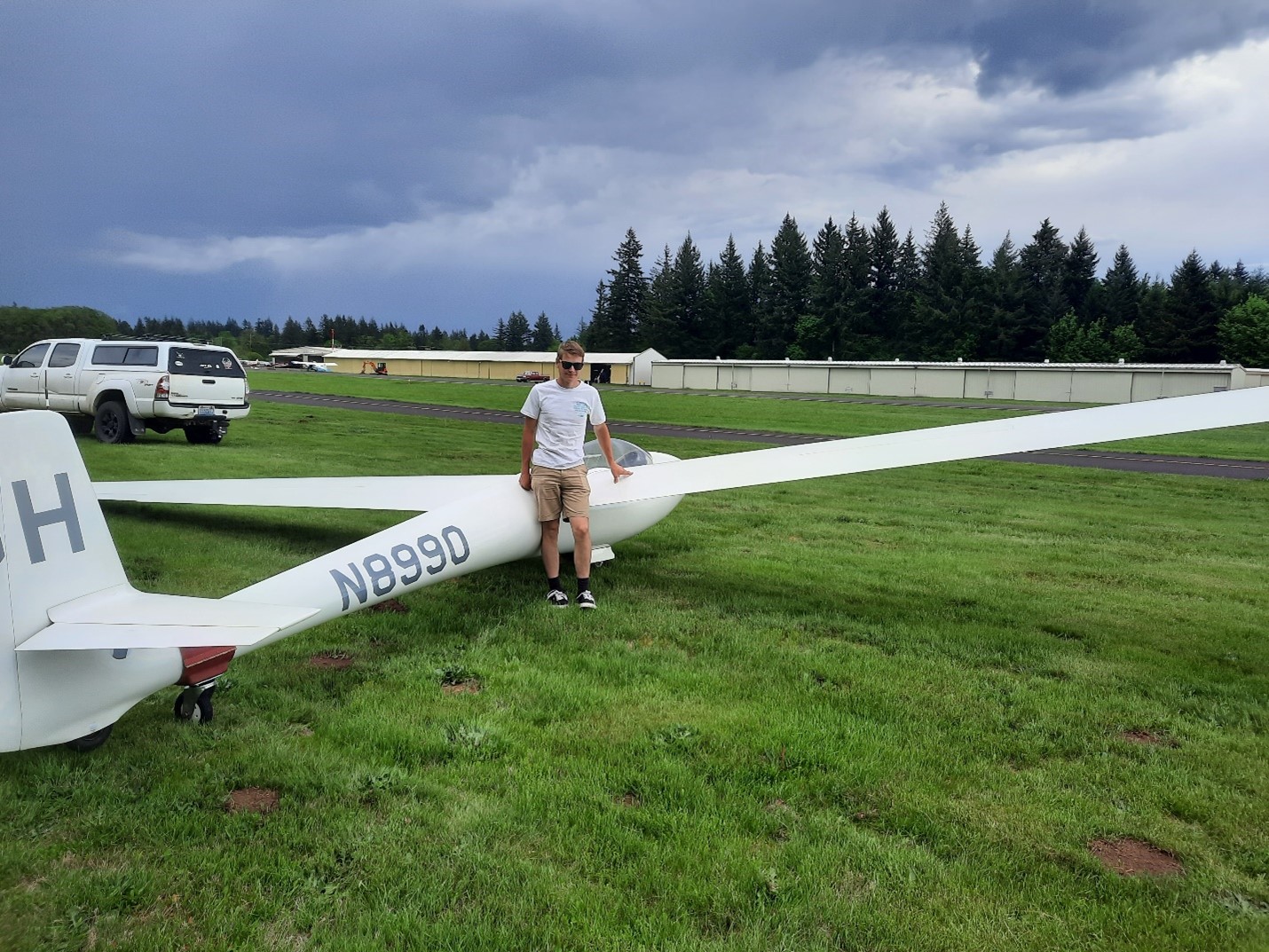
He was well into his second glider logbook by now with well over a hundred hours solo and—after a boatload of complications getting to the checkride that could justify an essay of its own—handily passed his checkride, again with DPE Robin Reid, then gave The Old Man his first glider ride.
Despite The Young Man’s overshadowing success—by this time, The Old Man was becoming known simply as The Young Man’s Father—and the incredible value of The Mentors, The Old Man was still worth something, even if only to be in The Car with The Young Man—because he did not yet have a driver's license, as they drove to Grove Field that day for The Young Man's first power solos in Neil’s Cub. The Young Man immediately registered as what may have been the youngest EAA Young Eagles volunteer pilot ever, and the poor Libelle was relegated to The Trailer for over a year as The Young Man avidly began flying passengers in the ASK-21.
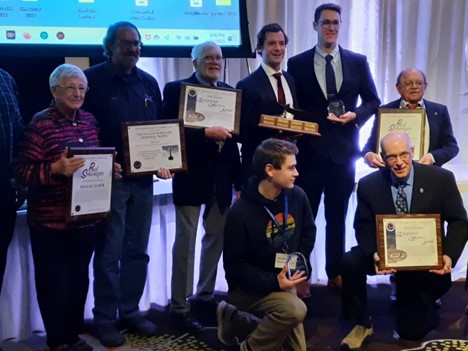
Things continued to progress for The Young Man, and one day a few months later, he knocked on The Old Man's home office door. When The Old Man opened the door, The Young Man silently handed him the letter, "Thank you for making the effort to apply for the Paul Kolstad College Scholarship grant. Congratulations on securing this most prestigious grant..." That led to a new assemblage of soaring contacts and recognition at the SSA Convention as The Young Man began striving to share his passion for flight with others, young and old alike.
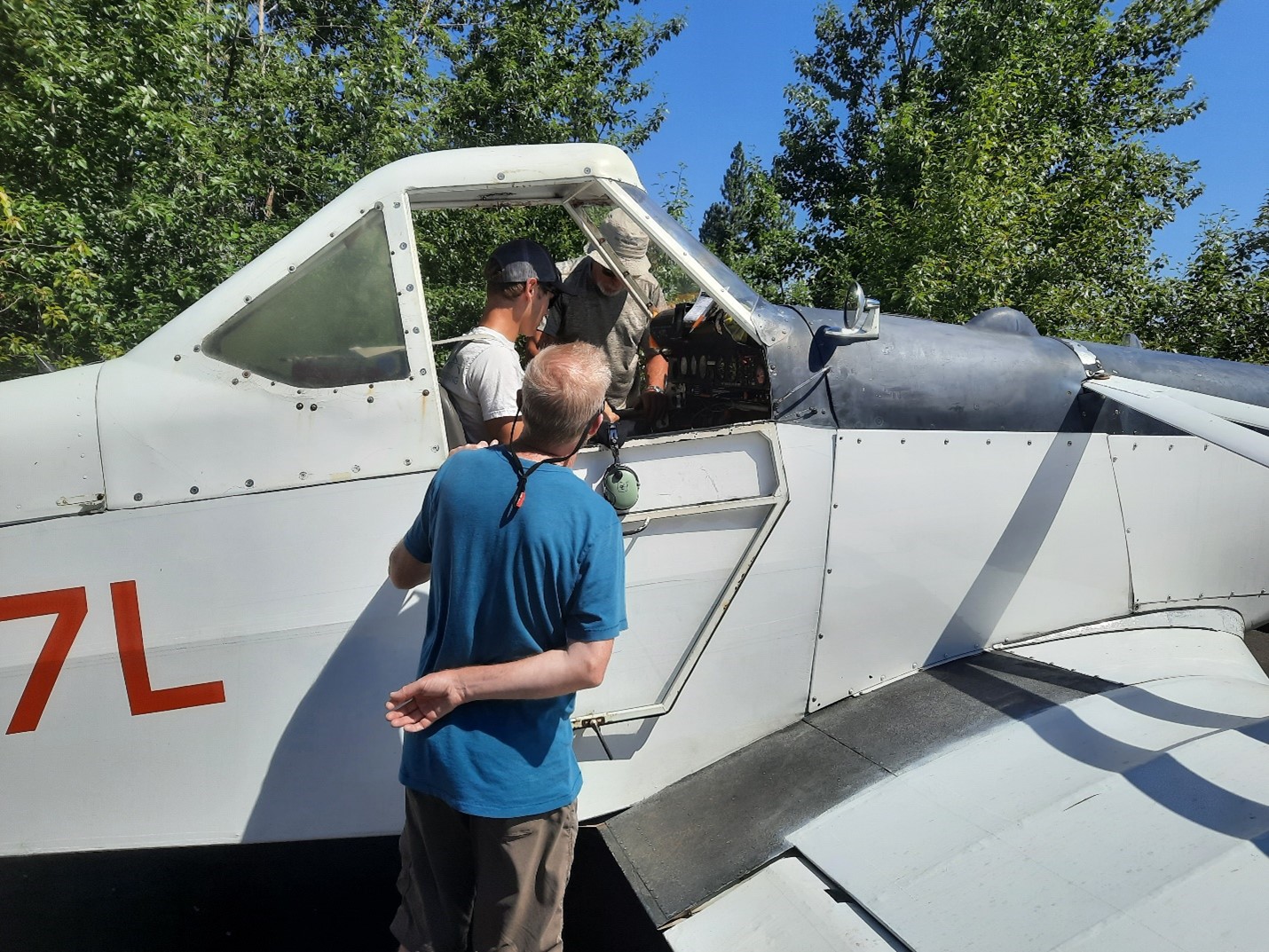
The Young Man was now Vice President of Hood River Soaring and began serious preparation for applying his scholarship to AMT school to supplement his next goals of towing gliders and eventually flying in Alaska. So he jumped neck-deep into his Instrument Training and completed his Private Pilot checkride for his 17th birthday, began towing in the Pawnee the next day, and passed his Instrument checkride 10 days later.
Now, our tale of Old Man and Kid might become just another coming-of-age story that fades into the anonymities of Old Age for Old Man and Adulthood for The Young Man, were it not for a curious twist that had developed by this juncture: somewhere along the way, The Old Man found himself walking the path so closely with The Young Man that it dawned on my gradually that he was beginning to know things about soaring—things he could not yet do himself, yet culminating in a new role and title: Youth Director at Hood River Soaring, perhaps the only non-pilot glider Youth Director anywhere. Here he was, helping steer 13 fledgling youngsters through their first steps in soaring education—and he had never taken a lesson.
The Old Man had been places with The Young Man that had prepared his mind, if not yet his hands and feet, for soaring at last, and now that The Young Man could drive himself to the airport, The Old Man began to allow tentative considerations to creep upon his consciousness that perhaps it truly was his moment. After all, hadn't he attended all those ground training sessions with The Kid before The Driver's License? Hadn't he spent 250 hours flying the Condor glider simulator and translating The Young Man's experiences into educational opportunities for 13 other young glider pilots-in-training? He was already neck-deep in coaching students through test preparation from pre-solo to FAA to the SSA Bronze Badge glider cross-country training program. He had spent innumerable hours learning the badge and record rules and helping The Kid declare tasks and claim badges and records; he had spent many late nights drawing final-glide circles as he helped The Young Man plan his flights. He had been a de facto navigator in the ASK-21 with The Young Man.
Still, he told himself, he had better make sure he understood it all well enough, so now came The Old Man's first logbook entries, glider and power: endorsements by The Kid's Instructors, to take his FAA written tests, and he passed both with aplomb. The Old Man now, finally, turned to Instructor Geoff Curtis to ask if he was willing to take on the formidable task of attempting to make a Glider Pilot out of The Old Man. And there he was, The Old Man, finally one day himself floundering with a mind too full of knowledge to allow his muscles at first to comply, no doubt sowing the Instructor’s mind with ample misgiving about his choice, as the ASK-21 staggered drunkenly down the runway on his first takeoff roll of his first lesson—where, despite his protests to the Instructor that he had better not expect his skills to match his knowledge, the Instructor gave The Old Man ample opportunity to demonstrate—as he did in grand fashion—that a head full of information does not inevitably translate to a smooth first takeoff and tow. Quite to the contrary, The Old Man found to his chagrin that the last quarter-century sitting at a desk wishing for the skies, coupled with too much technical knowledge devoid of practical application, left him floundering in his attempts to segregate stick and rudder on the ground and on tow.
But Instructors are patient and courageous, and after the most intensely focused training since School so long ago, and with an undoubtedly higher dose of instruction than The Kid had required, The Old Man found himself at his checkride at last with the same DPE having done The Kid’s checkride almost a year earlier, armed with the obligatory Joy of Soaring, Aerodynamics for Naval Aviators, a current sectional, the PTS, a dozen other books—and a nine-page printed blue-day cross-country flight plan no glider pilot in his right mind would print under circumstances not involving a DPE.
And at the end, there it was—the License, and The Kid was not yet a license ahead, although the day was past soon enough, with Private Pilot Power checkride on the 17th birthday, tow pilot endorsement the next day in the Pawnee, and the Instrument checkride but 10 days later.
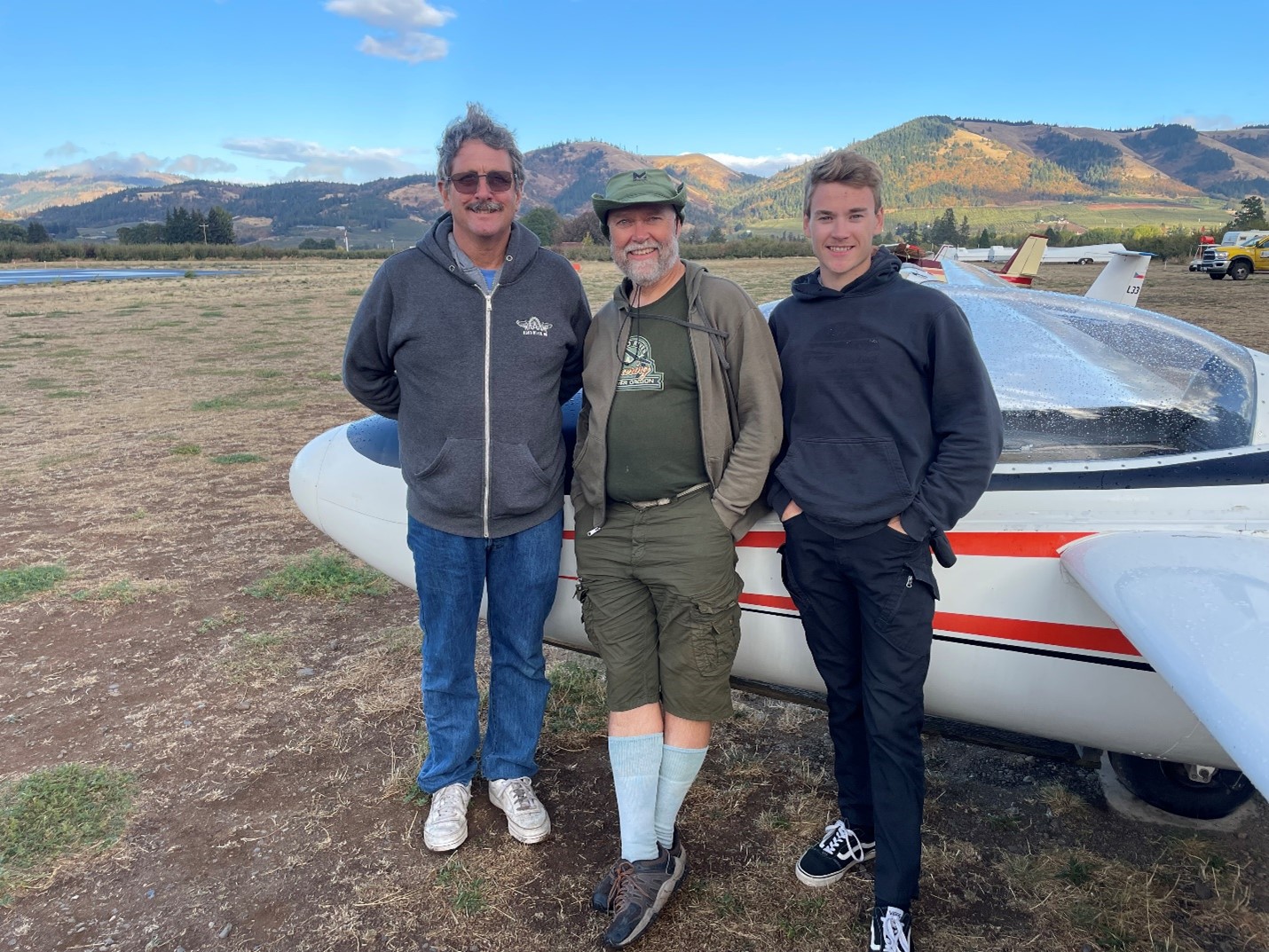
The Young Man went on to do over 800 tows in the Pawnee the next year, and although The Old Man arrived at Glider Commercial first, it was only by virtue of age; it was not long after that The Kid passed Glider Commercial and CFIG, and now, at last, the Old Man has joined Young Man as CFIG and both are teaching side by side CFIG.
The age of The Old Man and Young will never closen, and the once-convergent knowledge and skills of Man Old and Young are now on an evermore divergent path; once The Young Man came home talking of localizers and RNAV, it was all over. But for now they can continue to experience the joy of soaring together and continue to pass it on to others. The Old Man might even have to ask The Kid’s advice on a pilot relief system someday soon.